

Both maps
Show a visitor the way to the room they are visiting
Make a lobby screen hand an arriving guest the room they are going to, the floor it sits on and a plan with that room lit up — plus a "You are here" pin when the screen itself has a place on a plan. Four things have to be true, and when one of them is not, the guest gets a plain confirmation instead.
When a guest checks themselves in at a lobby screen, the screen can stop what it was showing and hand them their destination: You are going here., the room’s name, its floor and building, and a plan of that floor with the room lit up. Where the screen has its own place on a floor plan, a second inset map marks You are here so the guest can see both ends of the walk. It closes itself after a minute, or when they tap Close.
Nothing turns this on. It appears when four things are true, and this page is those four things.
On Classic the destination uses its drawn room area. On Map 2.0 it uses the room’s assigned scene object. Check the map family selected for the destination floor and assign its room when using Map 2.0. The arrival screenshots below illustrate Classic.
1. The visit has to name a room
A visit that names only a building has no destination to draw. Name the room when the invitation is written, or invite the guest from the booking that already holds it — a visit created that way carries the booking’s rooms across.
If the visit names several rooms, or the guest has several visits that day, the screen picks the earliest one that has not already ended.
2. That room has to be open to visitors
Only rooms ticked as visiting locations on the building travel with a visit. A room the host can book but nobody opened to visiting is dropped on the way, and the guest arrives with a visit that names no room at all.
Open Visiting locationTick it on the building’s Rooms page — see Open a building to visitors.
3. Link the room to the map in use
The room needs a floor and a place on that floor’s active map. On Classic this is the drawn room area; on Map 2.0 it is an assigned scene object. A room with only a floor is not enough. Check the selected map family and its room link before testing the arrival screen.
4. The guest has to check in at the screen
This is the lobby screen’s behaviour and nothing else’s. A receptionist checking somebody in at the desk sees no plan, and a guest who checks in on their own phone is told to collect their badge at reception. If the destination matters, the guest has to use the screen.
Check it worked
Check a test visitor in at the screen and watch for three things: the room name and its floor in the header, that room lit up on the plan, and — if you placed the screen on a plan — the You are here pin on the inset map. The footer reads Follow the map to reach your destination.
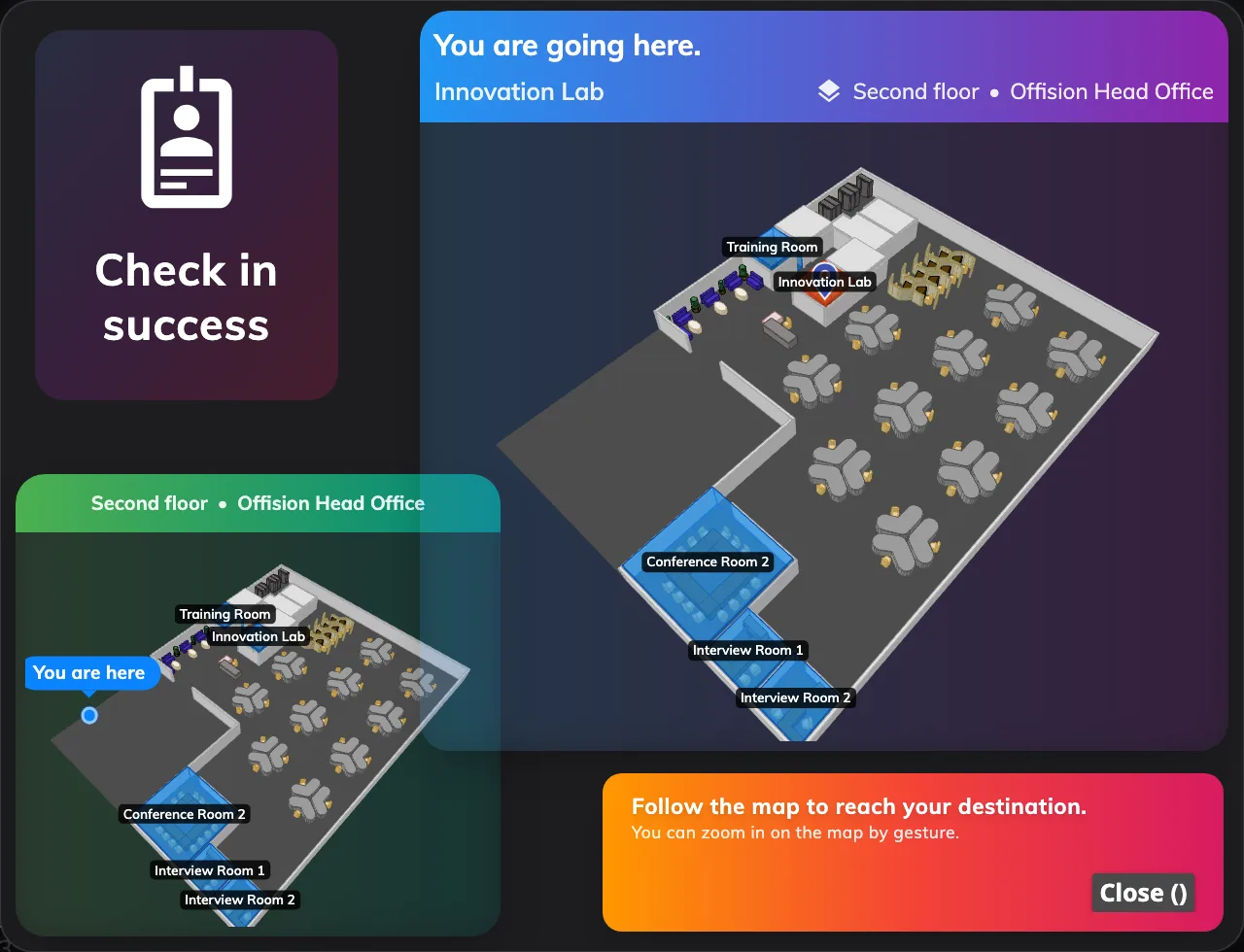
The destination, on a lobby screen: the room and its floor, that room lit up on the plan, and an inset map pinning where the guest is standing now.
When the map does not appear
The guest gets the plain confirmation instead — checked in, and where to collect their badge. That is the fallback, not an error, and there are only four reasons for it:
| What you see | What is missing |
|---|---|
| Plain confirmation, no room named | The visit names no room, or the room it names is not a visiting location |
| Plain confirmation for one guest only | That guest’s visit has already ended — only a visit still running or still to come is drawn |
| The room and floor, but no plan | The room has no matching map placement or assignment in the selected family |
| The destination map, but no You are here | The screen itself has no position on a floor plan. Set the device’s location |
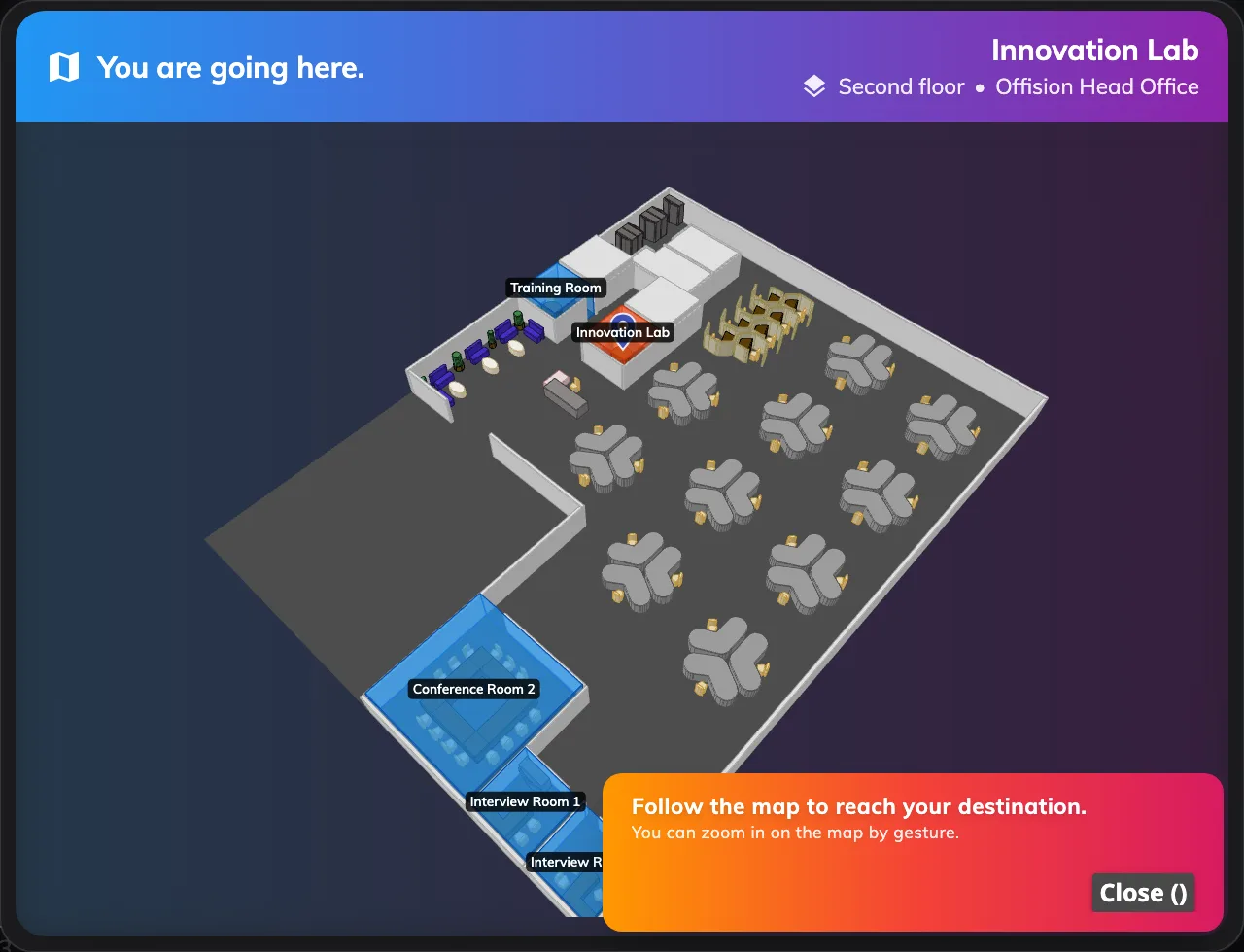
A screen with no place of its own on a plan still names the room and draws its floor — the guest just gets no pin for where they are standing.
What this does not do
- Route the guest. The plan lights the room and marks the screen. It does not draw a path between them or count the turns.
- Follow them. The popup lives on the screen they checked in at, for a minute. It is not sent to their phone and is not on the badge.
- Say who they are meeting. The destination is a place, not a person.