

How guest booking pages work
Publishing a page does not make every room on it available. A room must be selected on the page and licensed for guest booking. Existing reservations and out-of-service periods still prevent conflicts. A page can therefore be published while its guest room list is empty.
Why use this feature
A page is a booking service for a particular audience. A client meeting page can offer different rooms, hours and questions from a training page, while both use the same underlying room calendar. This lets staff tailor the invitation without creating a second inventory. Keep page presentation, resource availability and the final booking decision distinct when explaining the service to guests.
Publishing a page does not make every room on it available. A room must be selected on the page and licensed for guest booking. Existing reservations and out-of-service periods still prevent conflicts. A page can therefore be published while its guest room list is empty.
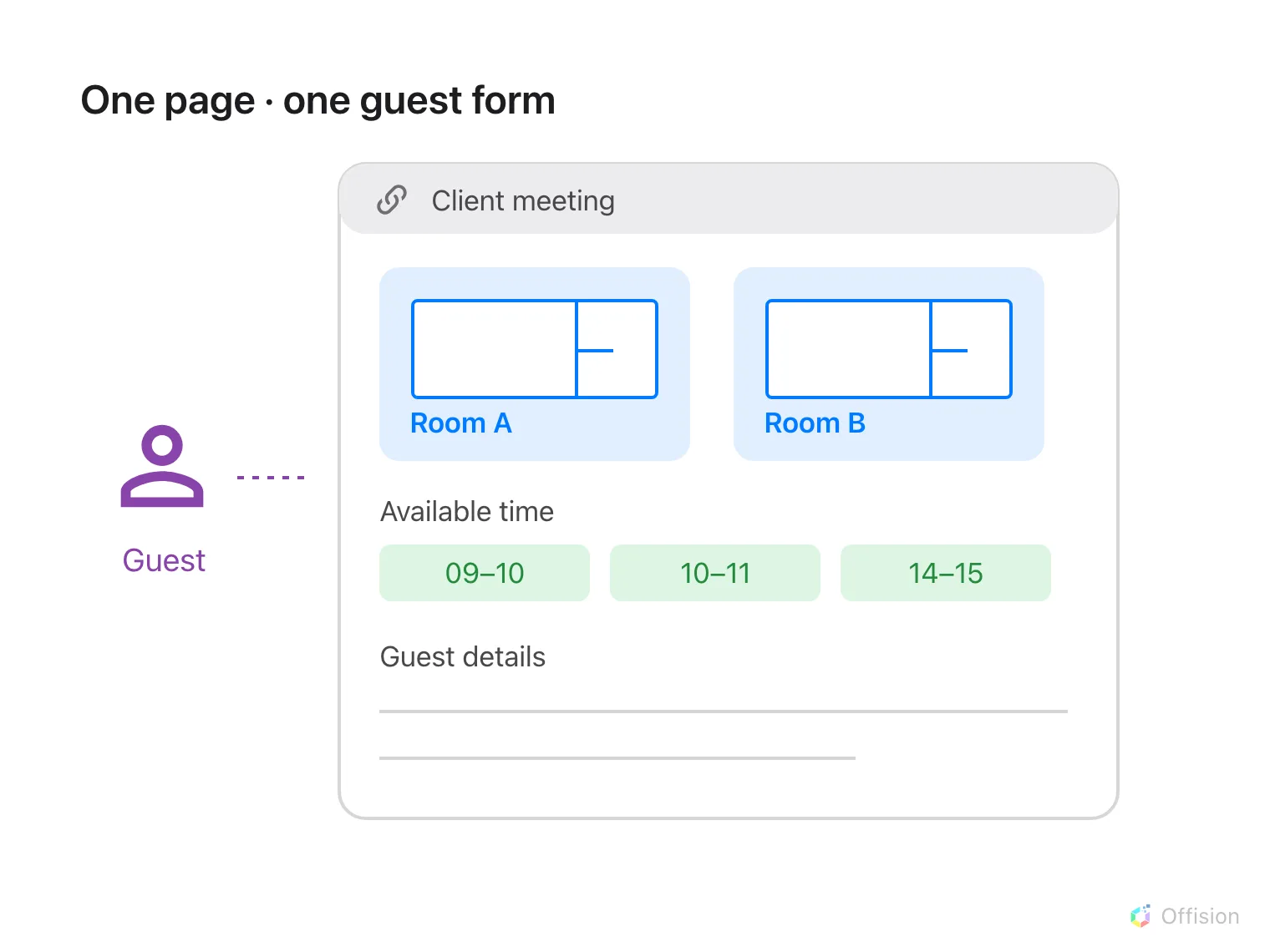
One shared page offers several rooms, a time picker and one guest form.
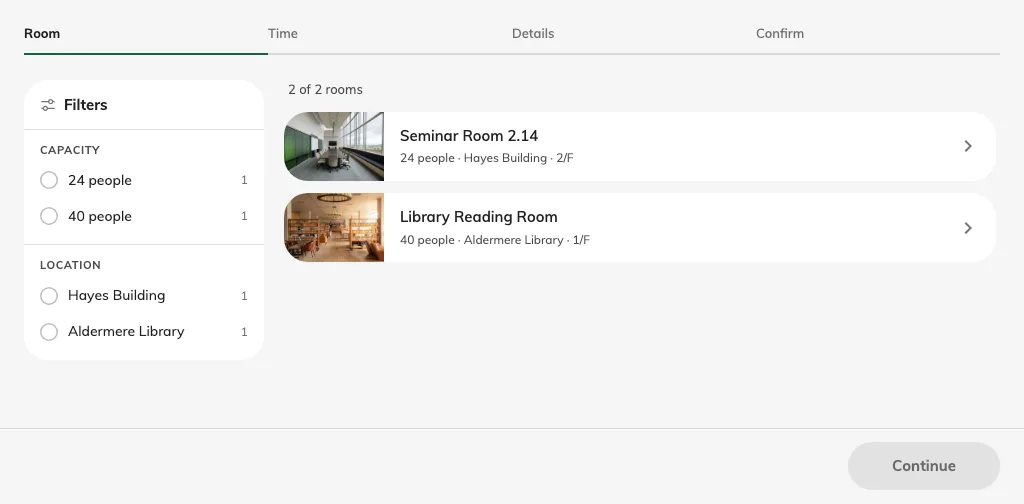
The published page starts with room selection.
The page owns its schedule, booking period, contact requirements and design. Apply room booking rules decides whether room policy restrictions also apply; it is off by default. When enabled, room hours, lead-time and duration rules can reject a choice that fits the page schedule. Approval follows the room review policy in either case.
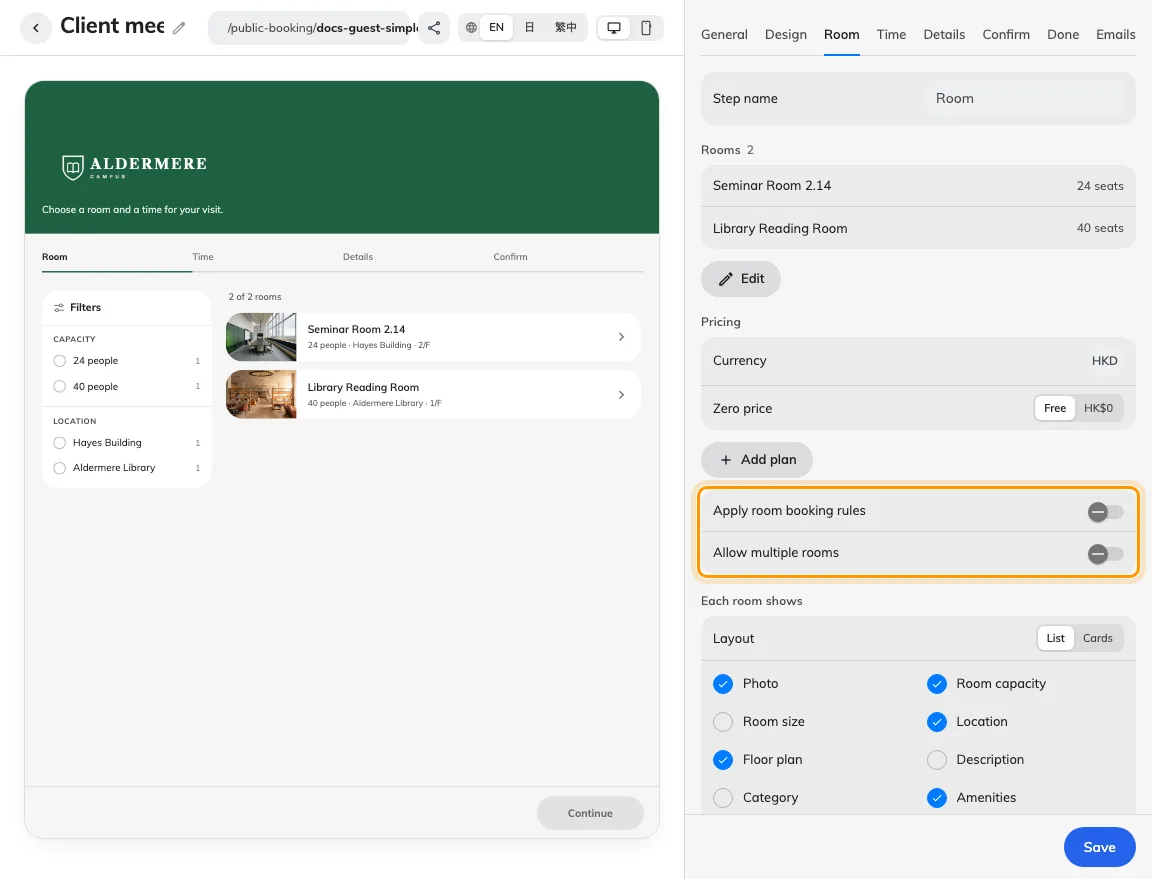
Room membership and room-rule checks are separate controls.
Rooms may appear on several pages. Contact rows and booking-form fields control what a guest supplies, while the room and time choices control what they reserve. A manage link identifies an existing booking; it is not a general sign-in account. Do not assume a room booking creates a visitor badge: check the visitor result separately.