

Take event attendance at the door
Scanning passes on the day, what each verdict means, and what happens when the Wi-Fi goes.
Take attendance opens the door scanner. Point the camera at somebody’s pass and they are checked in.
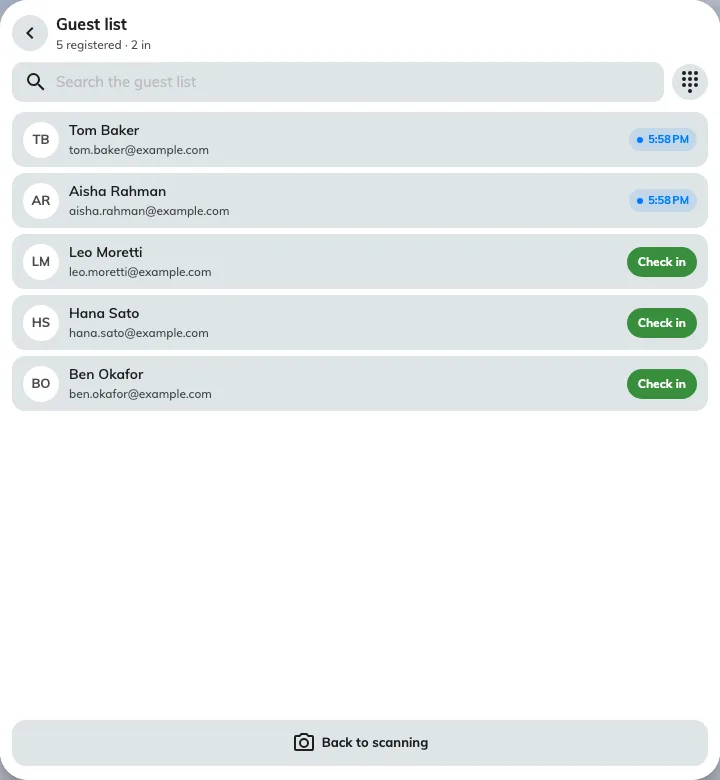
The guest list behind the scanner: who is in, and the button that admits the rest.
What the verdicts mean
Each scan comes back with one of these, in colour and with a sound:
| Verdict | What happened |
|---|---|
| Checked in | Done. Their arrival time is stamped |
| Checked in at time | They were already in. Nothing changes, and the original time is kept |
| Not registered | The code is not on this event’s list at all — ask for their name and look them up |
| Wrong event | A real pass, for something else. The guest is named, so you can tell them which |
| Registration cancelled | Their place was withdrawn. Check in anyway lets them in if that was a mistake |
| Not in this session | Registered for the series, but not this section |
Wrong event is the one worth knowing about in advance: it means the pass is genuine and the person is simply at the wrong door, which is a much friendlier thing to say than “not registered”.
When a code will not scan
Guest list searches by name, and checks somebody in from there. Use it for a cracked screen, a dead phone, or a colleague who never had a pass because they signed themselves up.
With no camera at all the scanner opens straight onto the list and says so.
Series events
The session chip at the top scopes the scan. Leave it on Whole event or pick one section — which is what makes Not in this session possible, and what you want when three streams are running at once.
If the network drops
Keep scanning. The app checks people in locally and shows Checked in · offline, with a running count of what is waiting. When the connection returns it syncs on its own, and a re-sync cannot double-count anybody.
That works because the guest list is loaded once when you open the scanner — so open it while you still have signal, not when the queue arrives.
Undo
Undo reverses a mis-scan, as long as the person has not been checked in before. Once somebody has genuinely arrived, their arrival time stands.