Problems you recognise Rooms and desks
When reserving a room costs nothing, booking early and deciding later is the rational move. The calendar fills with options, not meetings.
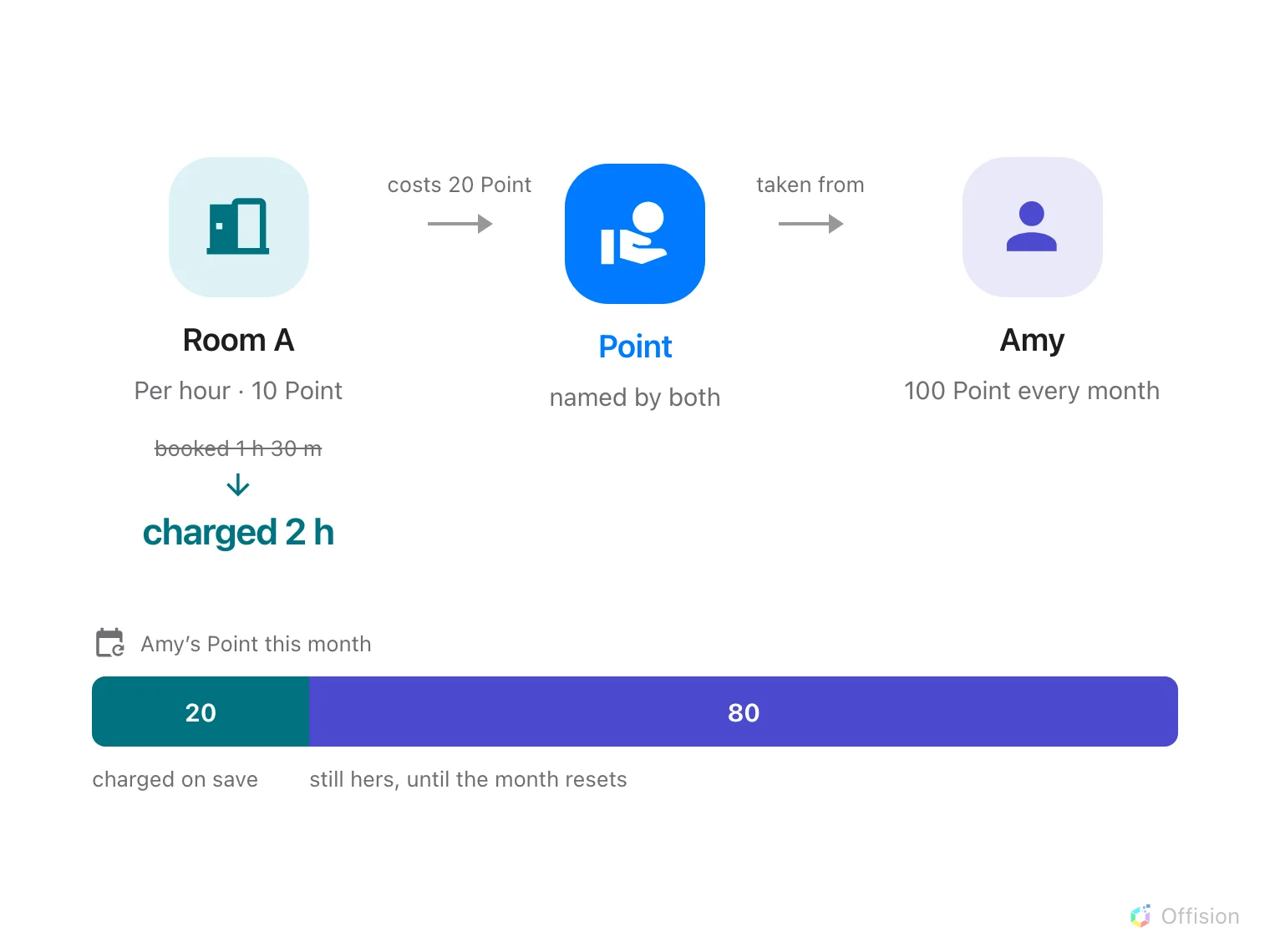
A resource quota policy sets what a booking costs; a user quota policy sets what each person has to spend. Both must share the same quota unit. Quota is charged when the booking is saved — not when it is approved. Cancel inside the refund window to get points back; a no-show keeps the charge.
Quota charges when someone saves a booking, so holding a room is no longer free. Teams still book what they need — they just release what they will not use.
Ghost bookings make a full calendar look like a space shortage. The fix is not more rooms — it is making bookings expire when nobody shows up.
Full article ›A standing weekly sync can keep blocking a room every Tuesday long after the project shipped. Series are easy to create and awkward to end — so ghost slots accumulate in silence.
Read this guide ›Without check-in, a no-show booking keeps the room marked busy on the calendar, the panel and the map — while the room sits empty in the corridor.
Read this guide ›Without check-in data, nobody knows which bookings became real meetings. The same ghost patterns repeat year after year because nothing measures them.
Read this guide ›Walk through your estate, your booking rules and your calendar setup with our team — or start free and try it on one floor.