Problems you recognise Rooms and desks
Meetings default to 30- and 60-minute blocks starting on the hour, so demand piles into a few slots while the half-hours either side stay empty — and everyone thinks the building is full.
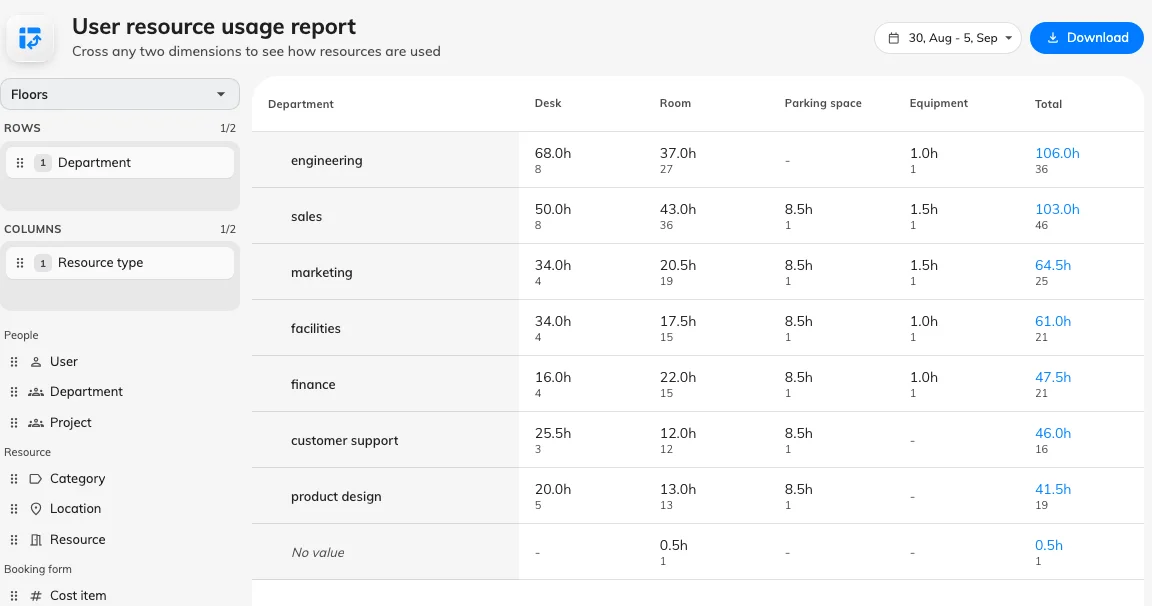
User resource usage in Booking Analytics builds a pivot grid — put Hour of day or Date in columns and Room in rows to see when demand stacks on the hour. Booked hours count scheduled length; compare floors and room sizes before assuming you need more space. A spike at 10:00 with quiet 10:30 slots usually means scheduling habit, not missing rooms.
Sometimes it is. Utilization by room, hour and size tells you whether you are short of rooms or short of visibility — measure before you spend on more space.
Demand is not spread evenly across the day, and your booking tool is probably not helping people find the alternatives that already exist.
Full article ›Staff request the same three rooms by name because those are the ones they can picture. Equivalent space on another floor goes unbooked while the favourites feel permanently full.
Read this guide ›If seeing what is free takes several clicks and a guess at the time, people stop looking and book the safe option far in advance — so peak slots feel gone before the day starts.
Read this guide ›A two-person catch-up takes a twelve-seat boardroom because nothing steered it elsewhere. The big rooms run out first for the wrong reasons while smaller rooms sit idle.
Read this guide ›Walk through your estate, your booking rules and your calendar setup with our team — or start free and try it on one floor.