 Neat
Neat
 Crestron
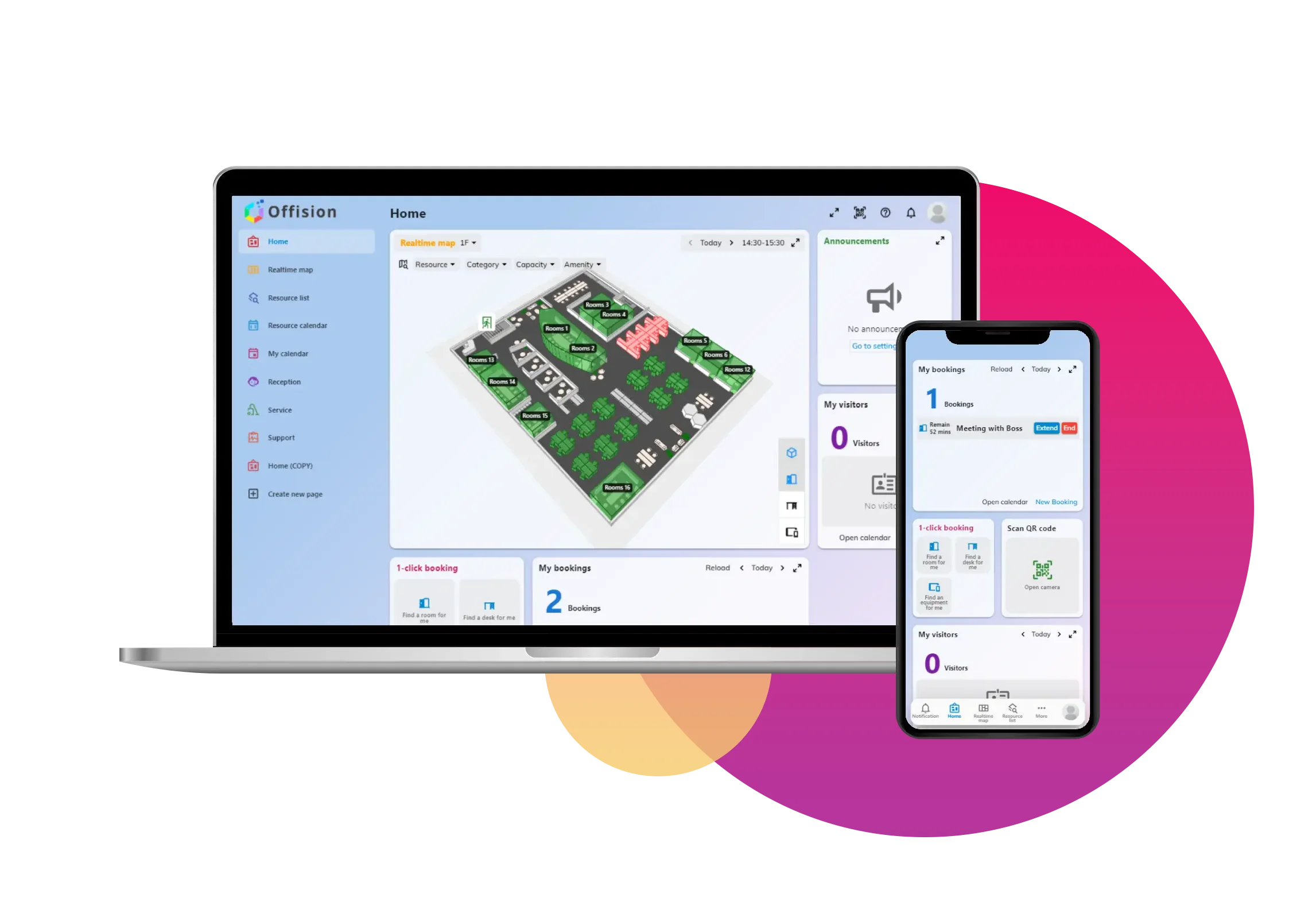
Recurring meetings outlive their projects
Old recurring series still block the room every week.
Offision caps how far a series can run ahead.
How recurring booking limits workProblems you recognise Rooms and desks
Ghost bookings make a full calendar look like a space shortage. The fix is not more rooms — it is making bookings expire when nobody shows up.
Content reviewed: September 2026
Old recurring series still block the room every week.
Offision caps how far a series can run ahead.
How recurring booking limits workNo cost to hold a room — calendars fill with maybes.
Offision charges quota when a booking is saved.
How booking quota worksBooked-but-empty still reads busy on the panel.
Miss check-in and the slot frees everywhere.
How check-in and auto-release workWithout check-in data, ghost bookings never get measured.
Offision compares booked hours to check-ins.
How utilization reporting worksThe same problem costs each group something different — and they rarely compare notes.
They lose the ten minutes before every meeting walking the floor, looking for a room the calendar says is taken.
They field requests for more rooms when the real problem is that existing rooms are held rather than used.
They approve fit-out or extra floor space to solve a shortage that better booking hygiene would have solved for free.
They get tickets when the calendar and panels disagree, but without utilization data they cannot tell whether sync, check-in, or booking rules need fixing.
Only if it applies everywhere. Most teams turn check-in on for scarce rooms and leave small huddle spaces open, so the friction lands where it buys something.
Offision releases the slot back to the pool after a grace period you set, and the room shows as available on the panel, the map and the app at the same time.
Yes. Offision Analytics compares booked hours against checked-in hours, so you can size the problem first and set policy with numbers behind it.

Walk through your estate, your booking rules and your calendar setup with our team — or start free and try it on one floor.


©2026 ONES Software Ltd. All rights reserved.