 Neat
Neat
 Crestron
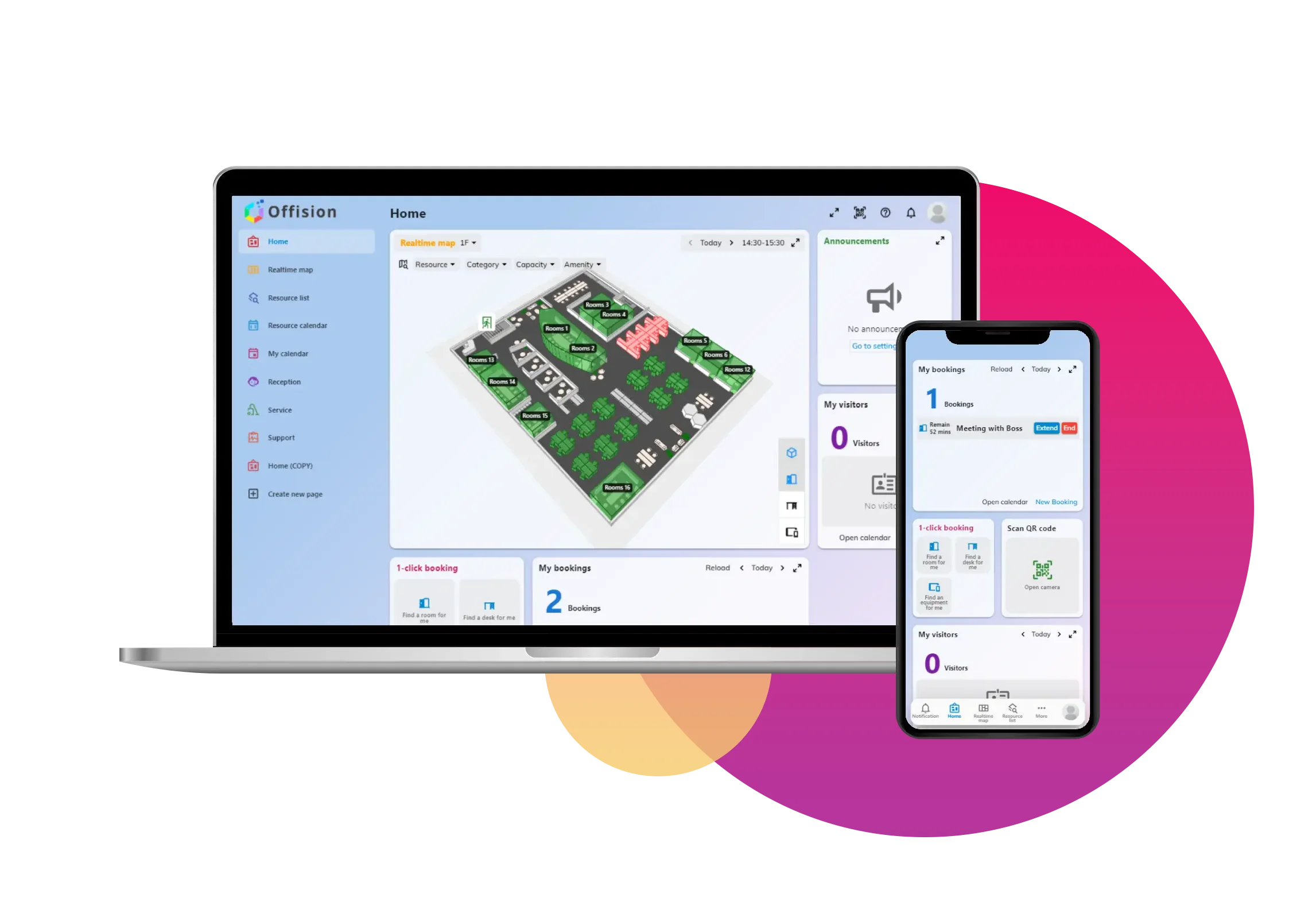
Two systems, two sources of truth
Two systems, neither authoritative — they disagree fast.
One source of truth with Microsoft 365 or Google.
How Microsoft 365 connection modes workProblems you recognise Rooms and desks
When bookings live in two systems that sync loosely, people stop trusting both — and start double-booking on purpose.
Content reviewed: September 2026
Two systems, neither authoritative — they disagree fast.
One source of truth with Microsoft 365 or Google.
How Microsoft 365 connection modes workOne-way sync loses reschedules and cancellations.
Changes push back to Outlook and Google.
How room sync from Microsoft 365 worksRoom mailboxes bypass your booking rules.
Offision applies quotas and check-in to calendar bookings.
How resource policies apply to calendar bookingsCross-region meetings land at the wrong local hour.
Each room anchors to its building time zone.
How buildings and floors anchor room timeThe same problem costs each group something different — and they rarely compare notes.
They arrive at a room showing someone else's meeting, cannot tell which system is right, and book twice next time.
They own the sync and receive the tickets, usually with no log showing which side changed what.
Their booking policies quietly do not apply to the majority of bookings, because those arrive through the calendar.
No — that is usually the wrong trade. Offision syncs both ways with Microsoft 365 and Google Workspace, so people keep booking where they already work.
With two-way sync there is a single availability record, so the second attempt sees the first and is refused, rather than accepted and reconciled later.
They are separate. Calendar and resource sync can run before or after you move to Entra ID single sign-on, though many teams do both in one project.

Walk through your estate, your booking rules and your calendar setup with our team — or start free and try it on one floor.


©2026 ONES Software Ltd. All rights reserved.