
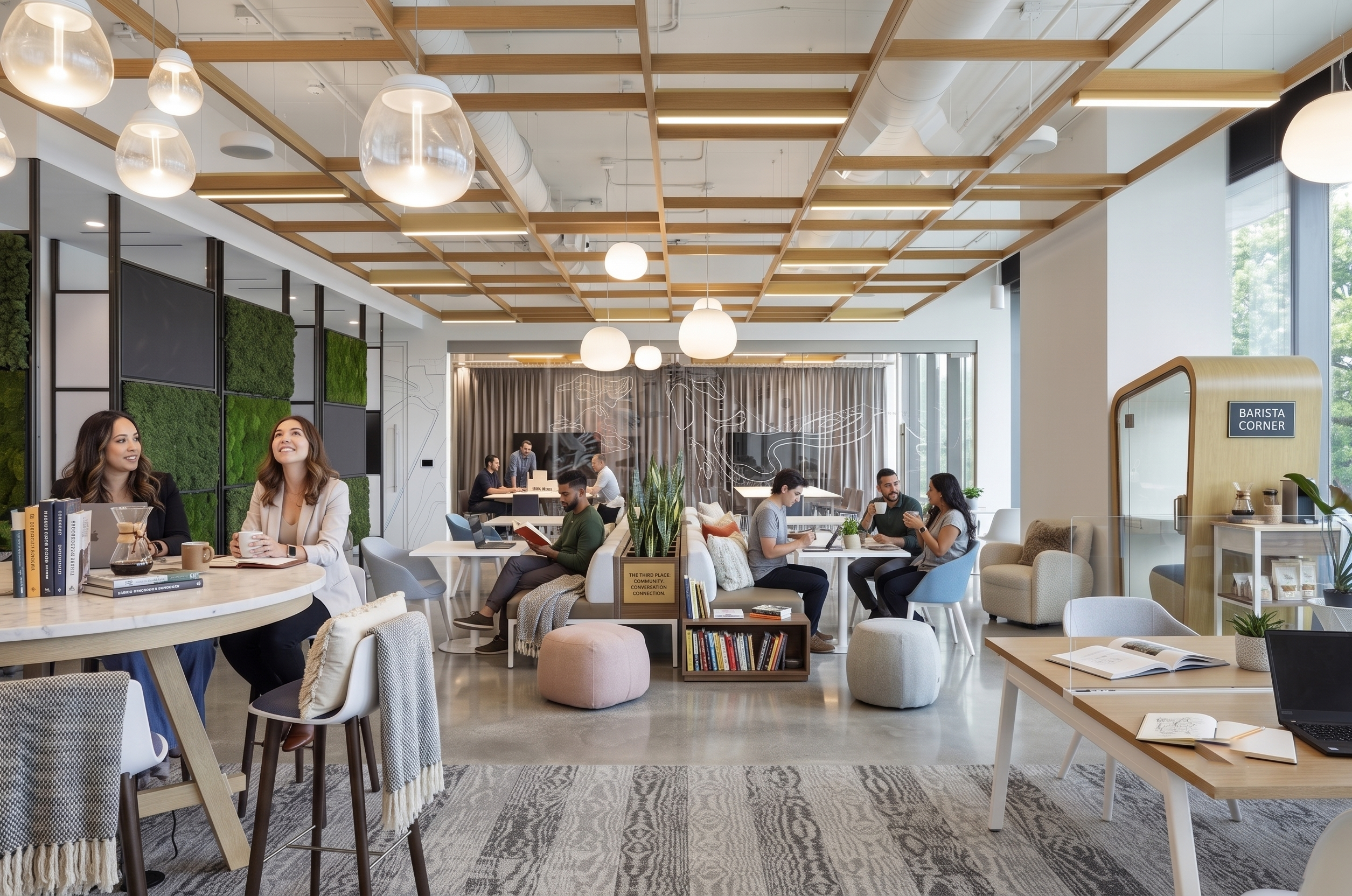
For decades, our lives were neatly divided into two primary geographies: the First Place (home) and the Second Place (the traditional office).
But in the late 1980s, sociologist Ray Oldenburg identified a vital missing link in urban society: the Third Place. Think of the local café, the neighborhood pub, or the bustling public square. These are neutral, accessible, and low-pressure environments where people gather voluntarily to converse, relax, and build community without the strictures of social hierarchies.
In the wake of the hybrid work revolution, a fascinating shift is occurring. As highlighted in a recent piece by The Executive Centre, modern professionals are increasingly relying on external third places—like business lounges and coworking spaces—to combat the isolating effects of remote work.
But for corporate leaders, this presents a critical challenge and a massive opportunity. The question is no longer just how we support employees working from external third places, but how we bring the magic of the Third Place directly inside the corporate office.
The Corporate Dilemma: Gathering vs. Mandating
According to research from Steelcase exploring Oldenburg’s concepts, there is a distinct difference between a genuine public third place and an “internal” corporate third place. You cannot simply put a premium espresso machine in a breakroom and declare it a third place. A true third place relies on autonomy, comfort, and psychological safety.
When companies try to mandate collaboration or force employees back into rigid cubicles, it fails. Employees crave the “buzz” of a cafe because it offers:
- Engineered Serendipity: MIT studies have long shown that unstructured, spontaneous face-to-face interactions fuel cross-departmental innovation far better than scheduled Zoom meetings.
- The Freedom to Flex: Research suggests that employees are significantly more productive when granted the autonomy to choose an environment that aligns with their immediate task or energy level.
- Human Connection: In a hybrid world where over 50% of remote workers report feeling isolated, spaces that foster community are no longer “nice-to-haves”—they are business imperatives.
To stay relevant, the modern corporate office must transform. It must blend the operational structure of the Second Place with the energetic, community-driven spirit of the Third Place.
Data-Driven Serendipity: How Offision Bridges the Gap
Creating an internal third place sounds abstract, but at Offision, we look at it through the lens of concrete business value and digital transformation. You cannot cultivate a thriving community if your space utilization is fundamentally broken.
An internal third place only works if it is accessible, frictionless, and perfectly aligned with how people actually move. That is where smart office technology becomes the ultimate enabler.
1. Eliminating Friction to Encourage Autonomy
A core tenant of Oldenburg’s third place is that it must be highly accessible. If an employee comes to the office looking for that “cafe buzz” in a collaborative lounge, but finds it overcrowded, or conversely, completely abandoned, the experience fails. Offision’s real-time occupancy sensors and space utilization analytics allow workplace leaders to understand exactly how “third-place style” zones are being used. Employees can instantly see where the vibrant energy hubs are—and where the quiet focus nooks reside—giving them the true freedom to flex.
2. Designing for the “Buzz” Using Real Data
Through architectural and workplace strategy insights, we know that successful third places require specific physical elements: comfort, flexibility, and the right density of people. Offision provides the data-backed foundation for Workspace Design & Corporate Strategy. By analyzing historical data on desk and room bookings, facility managers can redesign underutilized, rigid office footprints into dynamic, social hubs that mimic the environments employees are actively seeking outside the company walls.
3. Measuring the Impact on Community
Urban planning models show that the ultimate impact of a third place is vitality and connection. In a corporate setting, Offision’s analytics act as a pulse check on your office vitality. We help you move past asking, “How many people are at their desks?” to answering, “Are our collaborative spaces successfully driving the face-to-face interactions needed for innovation?”
The Next Step for Workplace Leaders
The future of work isn’t about choosing between the home and the office. It is about creating an ecosystem of choices.
If we want our teams to return to the office, we must stop designing spaces they have to be in, and start engineering environments they want to be in. By weaving the community-centric philosophy of the Third Place together with the smart technology of Offision, businesses can build a workplace strategy that doesn’t just optimize square footage—but actively unlocks human potential.
How is your organization bringing the “Third Place” experience into your office design? Let’s talk about how smart data can help you build a more connected workplace.
Leave a Reply