
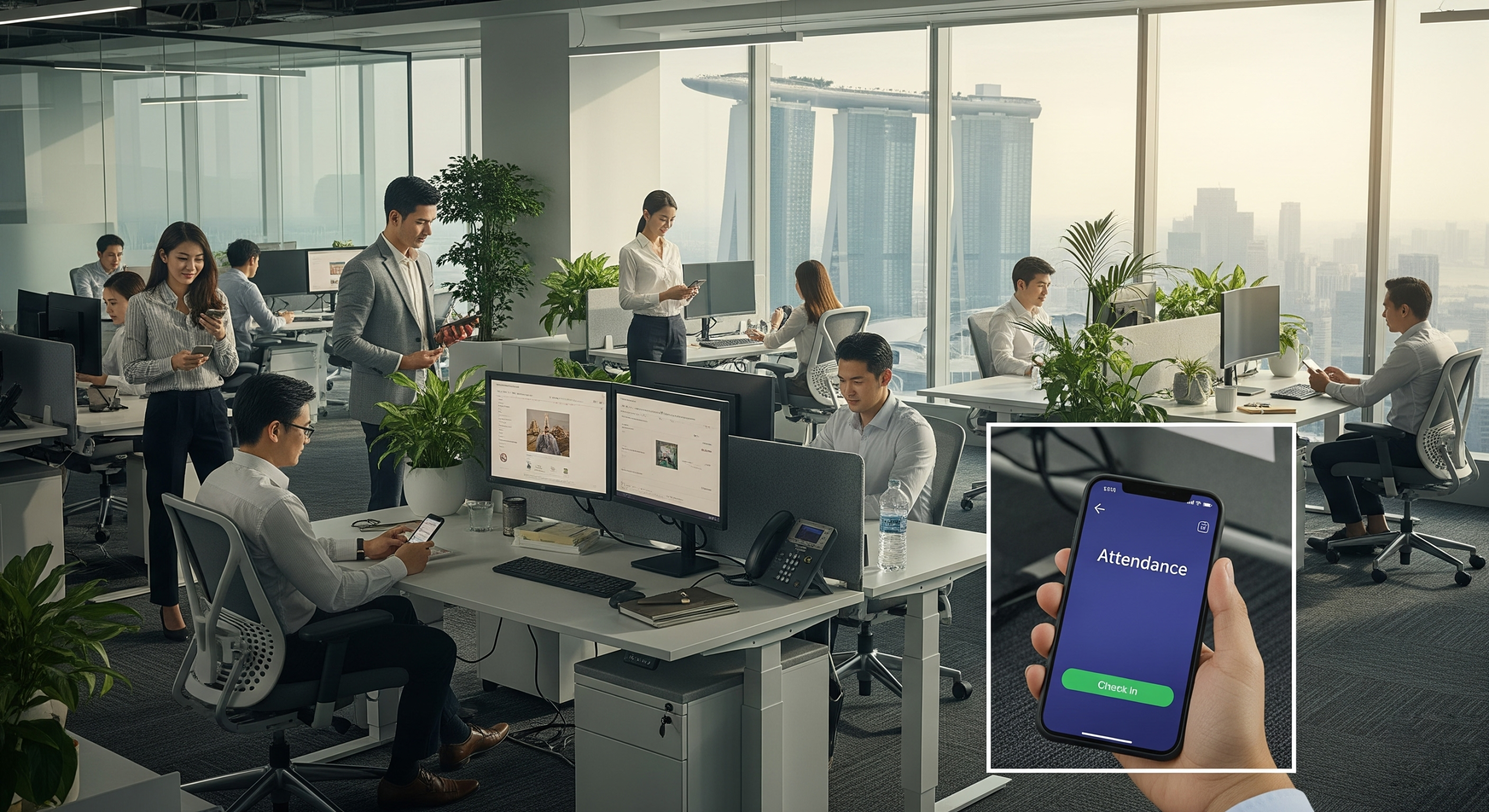
The view from the modern Singapore office has changed. The sea of dedicated desks, once buzzing from 9 AM to 6 PM sharp, has given way to a fluid landscape of collaborative hubs, quiet pods, and a workforce that seamlessly transitions between the office and their home.
Hybrid work isn’t just a trend; it’s the new cornerstone of Singapore’s professional environment, championed by both forward-thinking companies and supportive government initiatives like the Tripartite Guidelines on Flexible Work Arrangements (FWAs).
But as our work models evolve, a critical piece of office technology is often left behind: the attendance system.
Traditional methods—biometric scanners, punch cards, or manual sign-in sheets—are relics of a bygone era. In a hybrid world, they are not just outdated; they are counterproductive. They create friction, foster a culture of micromanagement, and fail to provide the insights needed to manage the modern workplace effectively.
It’s time to stop thinking about attendance as a tool for enforcement and start seeing it as a feature for empowerment and intelligence.
The Modern Attendance Feature: Smart, Seamless, and Strategic
A modern attendance feature is less about who is in and more about how the office is being used. It’s an integrated system designed for flexibility, trust, and data-driven decision-making. Here’s what it looks like in practice:
1. Mobile-First and Geolocation-Aware
The first rule of a hybrid-friendly system? It needs to be as mobile as your employees. A modern attendance feature allows for seamless check-ins via a mobile app.
- Remote & On-Site Check-ins: Allows employees to log their work location, whether it’s the office, home, or a client’s site. This provides a clear, transparent overview of where your team is working without being intrusive.
2. Integration with Your Workplace Ecosystem
An attendance feature shouldn’t be a standalone island. Its true power is unlocked when it communicates with the other tools you use to manage your workspace.
Imagine an employee books a hot-desk for Tuesday. The system automatically marks them as “expected in-office” for that day. This simple integration shifts the focus from “Did you clock in?” to “How can we best prepare the office for the team today?”. This data can then inform everything from air conditioning levels to pantry stock.
3. From Surveillance to Strategic Insights
This is the most critical shift. A modern attendance system is not a surveillance tool; it’s an analytics engine. It provides anonymized, aggregated data that helps you answer crucial questions:
- Optimize Your Real Estate: What are our peak occupancy days? Is our office space being used efficiently, or can we downsize or reconfigure it to better suit our needs?
- Enhance Collaboration: Which teams tend to come in on the same days? Can we use this data to encourage more intentional, face-to-face collaboration?
- Improve Resource Management: When should we schedule office-wide events or deep cleaning services for minimal disruption?
- Boost Employee Well-being: Are certain teams consistently working long hours in the office? This data can be an early indicator of potential burnout, allowing HR to intervene proactively.
4. Safety and Compliance, Simplified
In an emergency, knowing exactly who is on-site is a non-negotiable safety requirement. A real-time digital attendance log is far more reliable and accessible than a paper sign-in sheet. Furthermore, for roles where tracking work hours is essential for compliance with the Ministry of Manpower (MOM) regulations, a smart system provides accurate, indisputable records without the administrative headache.
Fostering a Culture of Trust and Autonomy
Ultimately, the biggest benefit of upgrading your attendance feature is cultural. By ditching the rigid, controlling systems of the past, you send a clear message to your employees: We trust you.
You trust them to manage their time, to choose the work location that makes them most productive, and to be accountable for their results. This autonomy is a cornerstone of a positive employee experience and a powerful tool in the competition for top talent in Singapore’s dynamic market.
Is your attendance system still built for a world that no longer exists? It’s time to adopt a feature that doesn’t just track time but empowers your people and optimizes your space for the future of work.
Leave a Reply