
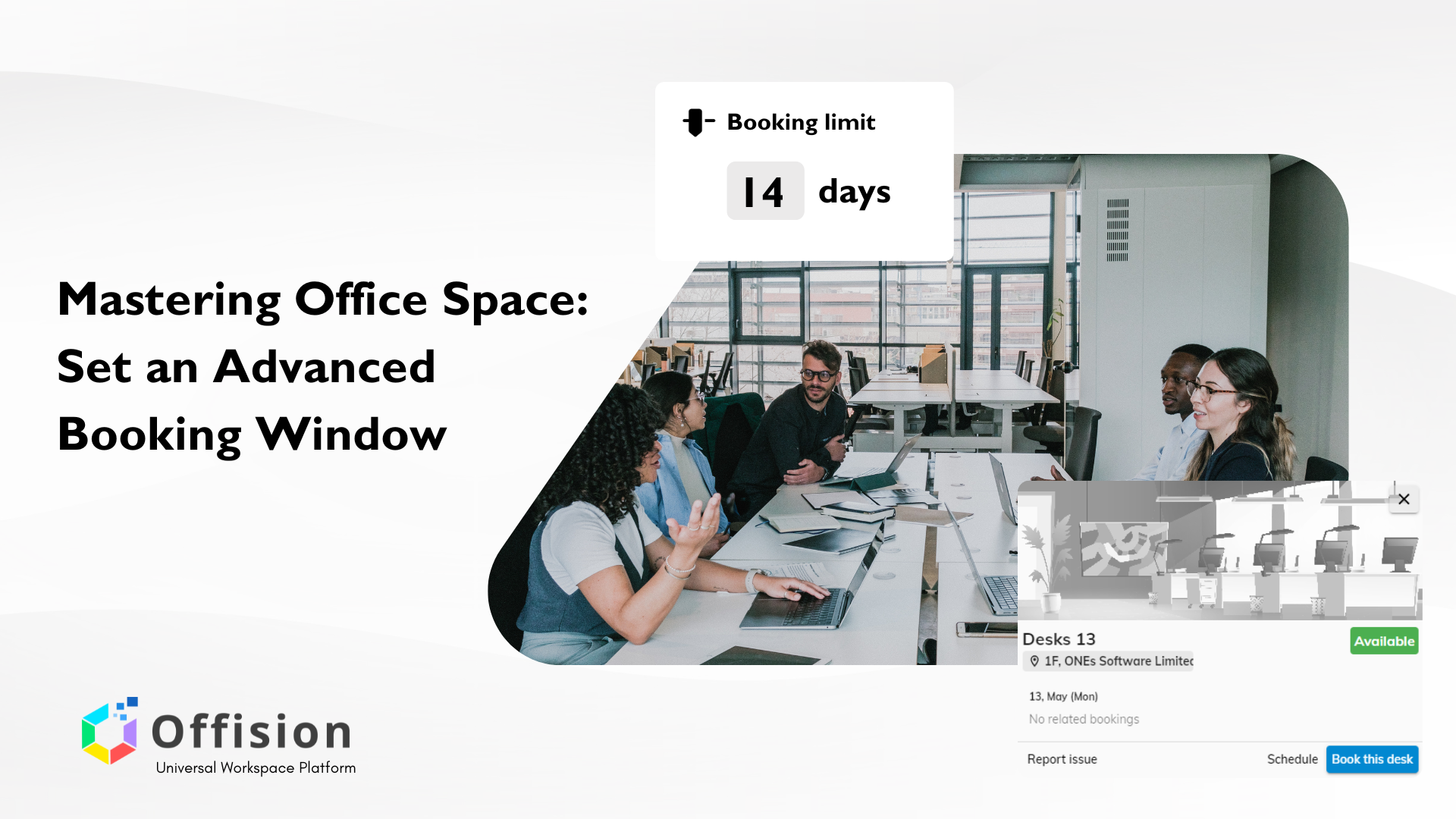
Imagine a workplace where every meeting room and desk is perfectly utilized, balancing efficiency with flexibility. This is possible by implementing an advanced booking window—a powerful strategy that ensures seamless scheduling and optimal use of office resources.
In today’s hybrid work environment, it’s essential to manage space effectively. By setting a booking window, companies can prevent resource hoarding, accommodate last-minute changes, and maintain a dynamic, collaborative atmosphere.
Case Study: Setting Up a Booking Window
Consider a tech company transitioning to a hybrid work model. To manage their limited office space, they implemented a two-week advanced booking window for meeting rooms and desks. This timeframe allowed employees to plan their schedules while preventing long-term monopolization of resources.
During the initial setup, the company communicated the new policy clearly, explaining its benefits and providing guidelines on how to use the booking system. They offered training sessions to familiarize employees with the process, ensuring everyone could navigate the system efficiently.
After implementing the booking window, the company monitored space utilization and gathered feedback from employees. This data-driven approach allowed them to make adjustments, such as extending the window for high-demand periods or offering additional resources during peak times.
Benefits of Setting a Booking Window

Setting an advanced booking window offers several advantages. Firstly, it prevents resource hoarding, ensuring equitable access to spaces. Employees can plan their schedules without worrying about long-term reservations blocking availability.
Secondly, it enhances flexibility. By limiting how far in advance spaces can be booked, organizations can adapt to changing needs and accommodate last-minute meetings or unexpected requirements. This flexibility is especially valuable in fast-paced industries where priorities can shift quickly.
Lastly, a booking window improves space management. By analyzing booking patterns, organizations can optimize layouts and resource allocation. Understanding peak usage times allows for better planning, ensuring that spaces are available when most needed and reducing idle time.
Conclusion
An advanced booking window is a powerful tool for mastering office space management. By balancing planning and flexibility, it ensures that resources are used efficiently, promoting productivity and collaboration.
Implementing a booking window requires clear communication and ongoing evaluation, but the benefits are well worth the effort. In a rapidly changing work environment, this strategy helps organizations stay agile and responsive to their employees’ needs.
With Offision, managing office space becomes effortless. Implement these smart policies to create a more efficient and user-friendly environment. Stay tuned for more insights in our series on optimizing office resource management!